
Best Shrubs to Plant in Front of House – Low-Maintenance & DIY Shrubs
 ChrisDecember 15, 2019Updated July 21, 2026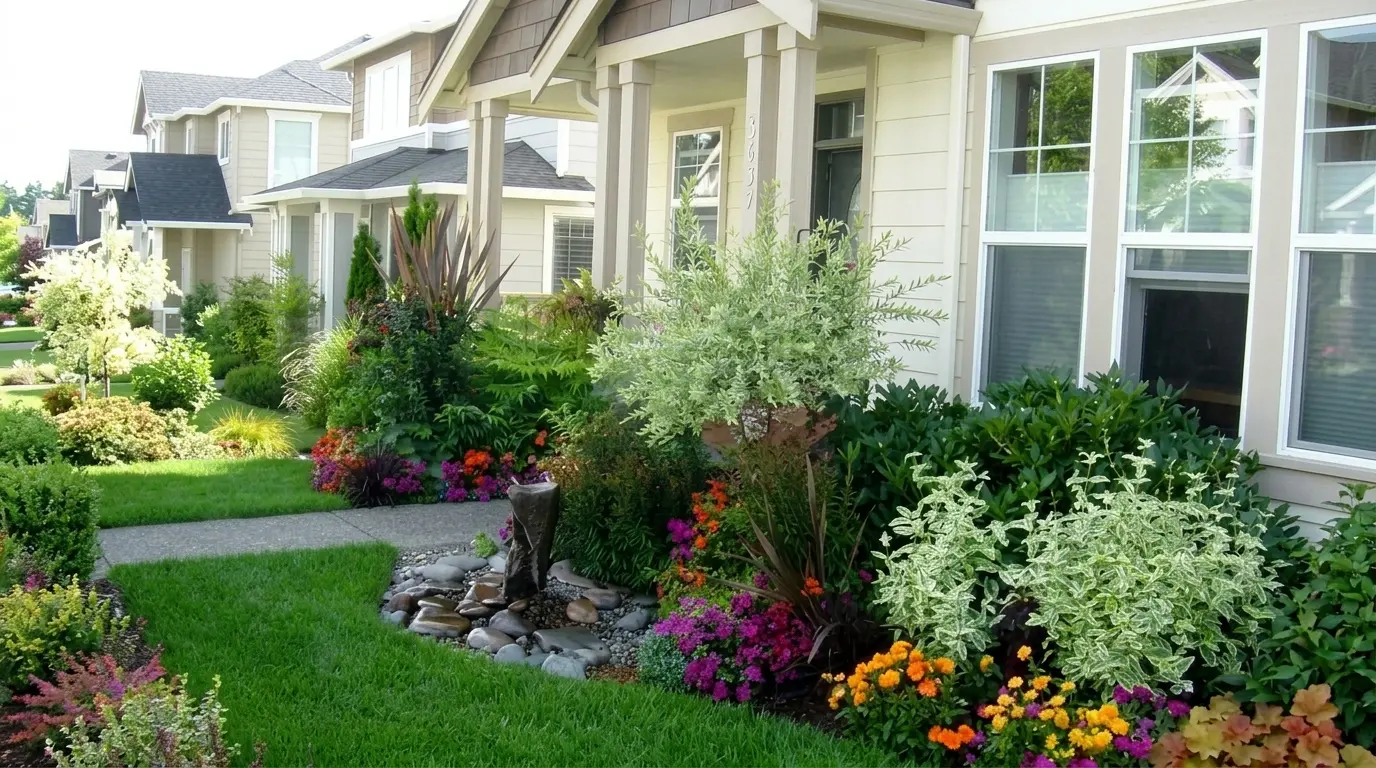
Looking to learn about the best shrubs to plant in front of your house? There is something unsettlingly stark about the intersection where house meets land — it asks to be softened with plants. But just concealing that juncture with a tight fringe of evergreens isn't the answer.
What Makes a Good Foundation Shrub for Your House?
A shrub or bush is a small- to medium-sized perennial woody plant. Unlike herbaceous plants, shrubs for the front of your house have persistent woody stems above the ground. Planting the best shrubs in front of your house creates a welcoming look for guests. Shrubs for full sun, like Ogon or Purple Smoke Bushes, usually soften the serious edge where your house meets the ground. These, along with varieties like Rosa Knock Out and Green-and-White Charmer, are among the best shrubs for creating a look homeowners love.
It comes down to the right plant in the right location. It should be evergreen, so it won't disappear in winter and the landscape always looks "finished." When we're preparing a landscape design, we constantly think about what it will look like in winter. It must also be the proper size — shrubs often look cute at the nursery, but after a few years of growth they can become huge. Read labels thoroughly and choose shrubs that won't cover your windows or doors.
Featured Shrubs
Cherry Laurel
Also known as Prunus laurocerasus, this is a favorite evergreen shrub in the Philadelphia region. Blame its popularity on the characteristic red berries it produces, or its eagerness to grow in warm and humid regions.
Mahonia
One of my favorite evergreen shrubs — a plant for people who want something tough and edgy that doesn't skimp on visual appeal.
Color Guard Yucca
I'm a sucker for variegated plants, so the Color Guard Yucca (Y. filamentosa 'Color Guard') is my first suggestion. Once established, it requires very little attention and can be root-divided every few years. It reaches a height of one to two feet — not bad!
Franklin's Gem Boxwood
Boxwood are the king of evergreens. These small shrubs are low-maintenance, provide year-round color, are deer-resistant, and disease/pest resistant, and grow in a number of sizes and shapes. Franklin's Gem is among the best examples — low-growing, typically rounded, and only reaching about 2' in height. When pruned, it gives an elegant, formal look to any landscape.
Magic Carpet Spirea
An excellent option for adding curb appeal. Its new foliage is red and matures to a lively gold color — in beds with black mulch, these really pop from the street. It also has the bonus of pink flowers in late spring. Reaching just 18"–24" in height, Magic Carpet Spirea is sure to shine in your landscape.
English Lavender
This Mediterranean herb packs fragrance into purple blossoms and silvery leaves. English lavender can form a fragrant hedge. In smaller gardens, try a compact variety like 'Munstead' or 'Thumbelina Leigh.'
Butterfly Bush
Prune these by late August so plants have time to harden off before freezes arrive. Once established, they largely take care of themselves — and the best perk is that they attract butterflies of all sizes and shapes to their blooms.
Fringe Tree
This beauty delivers white, fringe-like flowers in late spring to early summer, followed by blue-black fruits favored by birds. Fall color brings leaves that shift from bright green to shades of yellow-gold. It has no pest issues, stands up to pollution, and doesn't need pruning. These grow 12 to 20 feet in both height and width.
Coral Bells
Splash some color into garden beds with the striking leaves of coral bells. This group of plants offers almost any shade and prefers part sun, part shade. Many varieties bring bicolor styles to life. Use them to edge planting beds or fill containers. They're frequently deer-resistant and always low-maintenance.
Eastern Snowball Bush (Viburnum)
A durable deciduous plant that grows to about 8–12 feet high and spreads 10–15 feet wide. It supplies endless clusters of large, pure white, snowball flowers that brighten your front yard. It also has green foliage with reddish overtones in fall that looks more like an oak leaf, making it distinct from most viburnums. Use it as a shrub border, screen, hedge, or foundation plant — if pruning, do so not long after flowering.
Vanilla Strawberry Hydrangea
This shrub changes appearance all summer long — flowers begin green, quickly turn a velvety white, then blush pink, and finally settle into a rich rose color. It's a large, healthy, vibrant shrub that rises to 7 feet high and 5 feet wide within a few years, with a flowering period that continues into late fall. It also needs little maintenance.
Leucothoe
A hardy, native, deer-resistant evergreen shrub that needs very little special care, good for areas ranging from the Northeast to the southeastern U.S. The 'Curly Red' and 'Rainbow' (L. fontanesiana) cultivars add a handsome dash of color. It spreads happily beyond its initial planting area — a great option where you have plenty of square footage and a modest budget. It also tolerates heavy pruning well. L. axillaris is the best native option for an all-native garden and does especially well in the southeastern U.S.
Azalea
A favorite for its beautiful spring blooms and adaptability to a variety of conditions. The difference between a shaggy azalea and a well-formed one usually comes down to standard pruning. Prune in spring immediately after flowering, removing form-ruining growth as late as September. Choosing an evergreen variety is important for year-long performance — evergreen azaleas have thicker, leather-like leaves, while deciduous varieties have softer, more delicate leaves.
Growing Zones: Typically zones 6–9.
Euonymus
A variety of forms and colors are available, and aside from being a bit prone to insects, these evergreen shrubs are otherwise low-maintenance. You can find tall, upright varieties as well as low, controlled ones. The Manhattan Euonymus (Euonymus kiautschovicus 'Manhattan') grows to 6 feet tall in zones 5–10 and is a great choice for warmer climates. For a shorter option, try Emerald Gaiety (E. fortunei 'Emerald Gaiety'), which offers a more modest height and spread along with soft coloring that highlights the rest of the garden. This shrub can even become a climber if given the right support, like a trellis or arbor.
Growing Zones: Typically zones 5–9.
Pieris Japonica
A lovely evergreen shrub known for its shiny foliage highlighted with tints of red and gold, plus a waterfall of bell-shaped flowers. It prefers a shady spot protected from drying winds and acidic, well-draining soil. Watch out for powdery mildew, bark scale, whiteflies, leaf miners, and calcium deficiencies.
Not sure which shrubs are right for your yard? Get a free quote — we're happy to help you plan a foundation planting that fits your house and your maintenance level.